Action movies have given us some of cinema’s most unforgettable moments — perfectly choreographed fight sequences, breathtaking practical stunt work, car chases that defy physics, and the visceral satisfaction of watching a hero overcome impossible odds. But which films truly stand above the rest?
After analyzing IMDb ratings, cultural impact, box office longevity, technical innovation, and pure rewatchability, we’ve ranked the 25 best action movies of all time. This list spans eight decades of cinema and represents the full range of what the genre can accomplish — from character-driven neo-noir to pure kinetic spectacle.
In This Guide
What Makes a Great Action Movie?
The best action films are never just about explosions. Spectacle without stakes is noise. A truly great action movie requires several things working together:
- Compelling characters: You have to care about who’s in danger. The action sequences in The Dark Knight hit harder because you’re invested in Batman, not because they’re technically impressive (though they are).
- Tight pacing: Action films live or die by their editing. Dead time kills momentum; great action films have no dead time.
- Innovative choreography or stunt work: Each great action film advances the craft in some way — something you hadn’t seen before.
- Earned stakes: The audience needs to believe that failure is genuinely possible. Invincible heroes generate no tension.
- Rewatchability: The best action films reveal new details on repeat viewings — whether it’s technical craft, foreshadowing, or details in the background you missed.
The Top 25 Ranked
25. John Wick (2014) — IMDb: 7.4
Keanu Reeves redefined modern action filmmaking with this sleek, stylish revenge thriller. After a hitman’s dog is killed by the son of a Russian mob boss, he returns to work — and the film that follows is a 100-minute demonstration that action choreography can be elevated to an art form. The “gun-fu” style set a new standard that every major action film since has tried to replicate or surpass.
What made John Wick culturally significant was its commitment to craft over chaos. The camera stays back and lets the choreography breathe — no shaky-cam, no rapid cutting to disguise what can’t be performed. Three sequels followed; none matched the elegance of the original.
24. The Raid: Redemption (2011) — IMDb: 7.6
Indonesian martial arts cinema at its absolute peak. An elite SWAT team raids a tower block controlled by a crime lord — and discovers that the entire building’s residents are armed and hostile. The Raid is 100 minutes of relentless, breathtaking combat performed entirely by the cast without CGI or wire work. Director Gareth Evans and action choreographer Iko Uwais created sequences that put most Hollywood action to shame with a fraction of the budget.
23. Lethal Weapon (1987) — IMDb: 7.6
Mel Gibson and Danny Glover created the blueprint for the buddy-cop genre that dominated action cinema for two decades. The chemistry between the suicidal Riggs and the family-oriented Murtaugh remains unmatched — the partnership works because their differences are genuine rather than just comedic. Richard Donner’s direction keeps the tonal shifts between comedy and genuine menace feeling natural.
22. Speed (1994) — IMDb: 7.2
A bus that can’t slow below 50mph. That simple premise — elegant in its absurdity — became one of the most intense thrillers ever made and launched Keanu Reeves into full stardom two years before The Matrix. Jan de Bont’s direction is pure economy: every scene serves the central premise, and the escalating complications feel genuinely inventive rather than desperate.
21. Predator (1987) — IMDb: 7.8
Arnold Schwarzenegger versus an alien hunter in a Central American jungle. Predator masterfully blends military action with sci-fi horror — the first act plays as a straightforward special ops film before the genre shifts underneath the audience’s feet. The creature design remains one of cinema’s most iconic, and the film’s isolation and paranoia build to a genuinely tense conclusion.
20. Casino Royale (2006) — IMDb: 8.0
Daniel Craig’s debut as James Bond reinvented 007 for the modern era and made the franchise relevant again after a decade of self-parody. Grittier, more grounded, and anchored by one of cinema’s best opening chase sequences — Craig’s Bond is damaged, ruthless, and genuinely dangerous. The film works as an action thriller, a romance, and a character origin story simultaneously.
19. Kill Bill: Vol. 1 (2003) — IMDb: 8.2
Tarantino’s love letter to martial arts cinema, spaghetti westerns, and Japanese samurai films is a blood-soaked masterpiece of style and operatic revenge. Uma Thurman’s Bride is one of action cinema’s greatest protagonists — relentless, capable, and grieving in equal measure. The Crazy 88 sequence and the animated O-Ren Ishii origin remain two of the most striking action set pieces ever filmed.
18. Gladiator (2000) — IMDb: 8.5
Russell Crowe’s Maximus brought epic historical action back to the mainstream and earned Ridley Scott the Academy Award he’d long deserved. “Are you not entertained?” remains one of cinema’s most iconic lines, but it’s the quiet scenes — Maximus remembering his wife and son — that give the action its emotional weight. The film is fundamentally about grief expressed as violence, and that’s what makes it something more than a spectacle film.
17. Inception (2010) — IMDb: 8.8
Christopher Nolan created an action film that’s also a heist movie, a sci-fi puzzle, and a meditation on grief. The film’s central innovation — layered dream environments that follow consistent physical rules — allows action sequences set in multiple states of reality simultaneously. The rotating hallway fight remains one of cinema’s greatest technical achievements, and the ending has been debated seriously for fifteen years.
16. First Blood (1982) — IMDb: 7.7
Before Rambo became the franchise caricature, the original First Blood was a thoughtful, stripped-down thriller about a traumatized Vietnam veteran pushed past his limits by small-town law enforcement. Stallone delivers one of his finest dramatic performances, and the film’s final monologue is genuinely affecting in a way the sequels never approached. This is action cinema with something real to say.
15. The Bourne Identity (2002) — IMDb: 7.9
Matt Damon as a CIA assassin with amnesia changed the spy genre permanently — the Bourne series proved that action could be intelligent, grounded, and visceral simultaneously. The hand-to-hand combat style influenced a generation of films, and Paul Greengrass’s kinetic direction on the sequels remains a reference point for how to stage realistic close-quarters fighting.
14. Aliens (1986) — IMDb: 8.4
James Cameron turned Ridley Scott’s claustrophobic horror film into the definitive sci-fi action movie. Ripley’s transformation from terrified survivor to equipped warrior is one of cinema’s great character arcs, and the colonial marines provide both comic relief and genuine cannon fodder. Cameron’s action sequences are maximalist in the best sense — everything is big, everything is loud, and all of it serves the story’s escalating stakes.
13. Heat (1995) — IMDb: 8.3
Al Pacino vs. Robert De Niro. Michael Mann’s downtown Los Angeles shootout — staged with unprecedented real-weapon realism, with the cast training with tactical advisors until the movements were muscle memory — remains the most technically impressive and emotionally devastating action sequence in film history. But Heat earns that sequence through three hours of character work: you understand both men completely before the shooting starts, which makes everything that follows land with genuine weight.
12. RoboCop (1987) — IMDb: 7.6
Paul Verhoeven’s satirical sci-fi action masterpiece is set in a dystopian Detroit where corporations control law enforcement. Beneath the ultraviolence lies brilliant social commentary on privatization, media, and what’s left of humanity when stripped to its commercial utility. It’s one of the rare action films that works as genuine satire, and Verhoeven’s commitment to both registers — absurd comedy and shocking violence — is what makes it endure.
11. The Terminator (1984) — IMDb: 8.1
James Cameron’s debut feature was made for $6 million and launched one of the most iconic franchises in Hollywood history. The Terminator’s concept — an indestructible machine sent from the future to kill the mother of humanity’s future leader — is elegantly simple, and Cameron executes it with relentless craft. Schwarzenegger’s casting as the antagonist was a stroke of genius that neither actor nor director anticipated.
10. Raiders of the Lost Ark (1981) — IMDb: 8.4
Steven Spielberg and George Lucas created cinema’s greatest adventure hero in Indiana Jones, and Raiders of the Lost Ark is the film that established every archetype. The boulder scene, the truck chase, the “just shoot him” swordfight — each set piece is a masterclass in building and releasing tension through staging, performance, and precise editing. Every adventure film made since owes something to Raiders.
9. The Dark Knight (2008) — IMDb: 9.0
Heath Ledger’s Joker elevated superhero cinema into prestige filmmaking. The Dark Knight proved that a comic book adaptation could operate with the moral complexity and dramatic weight of serious literature. Nolan’s Joker is chaos embodied — not a madman with a plan, but a force that exposes the fragility of civilization’s rules. The film has aged into something close to a genuine masterpiece, and remains the high-water mark of the superhero genre.
8. Terminator 2: Judgment Day (1991) — IMDb: 8.6
The rare sequel that genuinely surpasses the original in nearly every dimension. Cameron’s groundbreaking liquid metal CGI was technically revolutionary, but it’s the film’s emotional core — John Connor humanizing the Terminator he once feared — that makes it more than a showcase for effects. T2 remains the gold standard for action sequels, and no franchise has matched what Cameron accomplished.
7. The Matrix (1999) — IMDb: 8.7
The Wachowskis created a film that redefined what action cinema could be, look like, and mean. Bullet time changed visual language permanently; the red pill became a cultural touchstone; Keanu Reeves as Neo remains one of the era’s defining performances. Beyond the spectacle, The Matrix asked genuine philosophical questions about reality, free will, and the nature of perception — and did so in a mainstream blockbuster. That it holds up 25 years later is the truest measure of its achievement.
6. Die Hard (1988) — IMDb: 8.2
The greatest Christmas action movie ever made, and the template for the “reluctant hero in confined space against overwhelming odds” genre that followed. John McTiernan’s direction is impeccable — the Nakatomi Plaza feels like a real building, and John McClane feels like a real person rather than an action figure. Bruce Willis made the character’s vulnerability and humor work in equal measure, which is why so many imitations fail.
5. No Country for Old Men (2007) — IMDb: 8.2
The Coen Brothers created cinema’s most terrifying villain in Anton Chigurh — a man who operates by a personal moral code so alien it reads as pure malevolence. This modern western blends action, thriller, and philosophical meditation into something unforgettable. The film’s refusal to deliver conventional narrative satisfaction — its ending denies the audience the confrontation it’s been building toward — is a deliberate choice that rewards contemplation rather than frustrating it.
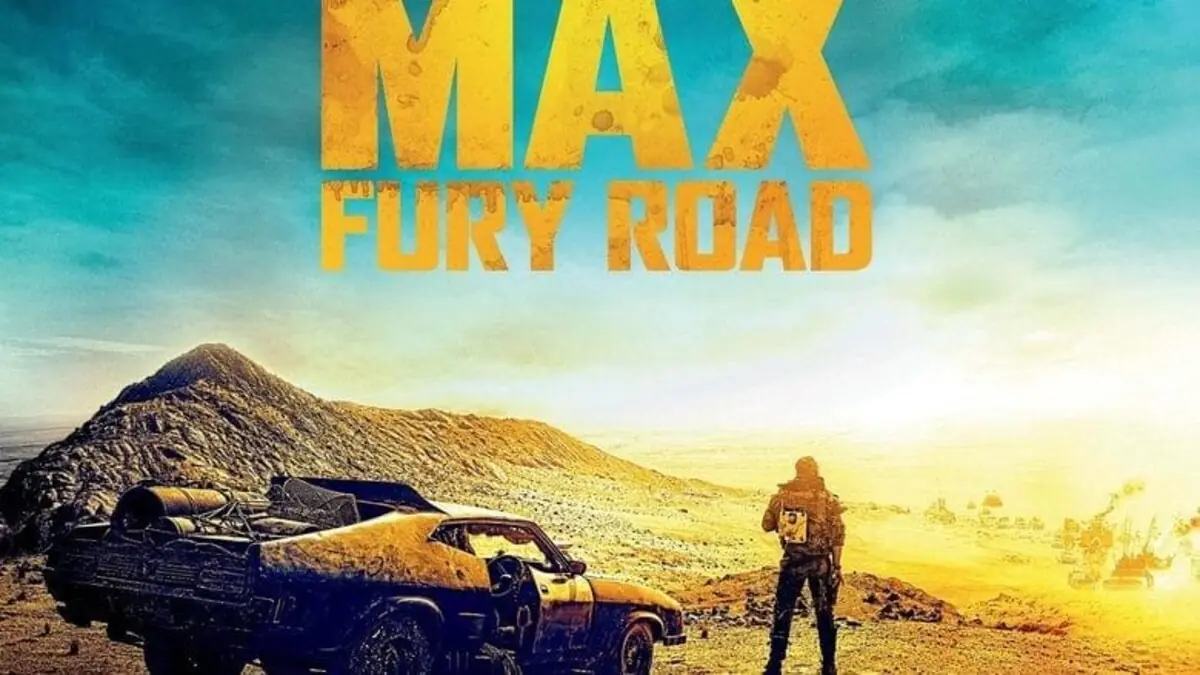
4. Mad Max: Fury Road (2015) — IMDb: 8.1
George Miller, at 70 years old, created the most visually stunning action film ever made. Two hours of almost entirely practical stunt work — 90% of what you see on screen was built and driven and destroyed by real people — staged with an editing rhythm and visual coherence that defies its own chaos. It won 6 Academy Awards, including editing and production design, which is almost unheard of for an action film. Fury Road didn’t just win awards; it set a new ceiling for what the genre could be.
3. Sicario (2015) — IMDb: 7.6
Denis Villeneuve’s border war thriller operates as a devastating critique of American drug policy, a procedural thriller, and an atmospheric masterwork simultaneously. Emily Blunt’s FBI agent is dragged into an operation whose moral parameters keep shifting beneath her feet, and the film’s refusal to provide easy answers is what makes it extraordinary. The border crossing sequence — shot by Roger Deakins in a single long take as the sun sets — is pure masterclass filmmaking.
2. Point Break (1991) — IMDb: 7.3
Kathryn Bigelow’s adrenaline-fueled masterpiece — FBI agent infiltrates a gang of surfer bank robbers — is an unexpectedly profound film about freedom, identity, and the seduction of pure experience. The skydiving sequences were shot with the cast and crew actually jumping; the surfing footage is genuinely spectacular. Keanu Reeves and Patrick Swayze create a genuine bromance with real emotional stakes. Bigelow directs action better than almost anyone working, and this is her finest pure genre achievement.
1. Collateral (2004) — IMDb: 7.5
Michael Mann’s neo-noir thriller is the best action film ever made because it’s the most complete film on this list. Tom Cruise’s Vincent is a contract killer of cold precision — intelligent, philosophical, and utterly lethal — and Jamie Foxx’s cab driver Max is drawn into his world across a single Los Angeles night. Shot on digital video by Dion Beebe and Michael Mann himself, the film captures the city’s nocturnal beauty with an intimacy that 35mm couldn’t achieve.
What separates Collateral from everything else on this list is its intelligence. The action sequences are exceptional, but they serve a film genuinely interested in ideas: the randomness of violence, the cost of passivity, the difference between efficiency and meaning. The ending delivers on every thread the film has been building. It’s the most technically sophisticated action film made in the past thirty years, and it deserves the top spot.
Honorable Mentions
Films that came close to the top 25: Nobody (2021 — Bob Odenkirk channeling rage into one of the decade’s best action films), Upgrade (2018 — inventive sci-fi action on a low budget), Crank (2006 — maximalist action filmmaking taken to its logical extreme), Eastern Promises (2007 — action-crime with genuine literary weight).
Action Cinema by Era
1980s: The Practical Stunt Era
The 80s produced some of the most kinetic, physically immediate action films ever made — Die Hard, Predator, Aliens, The Terminator, Lethal Weapon, RoboCop, Raiders. No CGI, no digital enhancement. Every stunt was performed by a human being, and the best directors of the era knew how to frame those performances for maximum impact.
1990s: The Franchise and Style Era
Heat, The Matrix, Point Break, Terminator 2, Speed, Casino Royale’s template-setting predecessors. The 90s expanded action’s tonal range — from Michael Mann’s literary crime epics to the Wachowskis’ philosophical spectacle. Hong Kong action cinema’s influence (Jackie Chan, John Woo) finally reached mainstream Hollywood.
2000s–2010s: The Grounded and Artistic Era
Bourne redefined spy action. John Wick redefined choreography. Fury Road redefined what practical effects could look like. The Dark Knight proved superhero action could be serious cinema. This era was defined by filmmakers treating action as a craft worth mastering rather than a genre to be produced.
Frequently Asked Questions
Q: Why is Collateral ranked #1 over Die Hard or The Dark Knight?
A: Because the ranking weighs craft and ambition alongside entertainment value. Die Hard and The Dark Knight are exceptional at what they do. Collateral does more with less — it’s a film that operates simultaneously as action, neo-noir, philosophical drama, and character study, with action sequences that serve all those registers. It’s the most complete action film ever made.
Q: Why isn’t The Dark Knight #1 if it has the highest IMDb score?
A: IMDb scores reflect popularity and recency bias as much as quality. The Dark Knight’s 9.0 score reflects how beloved it is and how widely seen it is. Ranking by IMDb alone would produce a list of the most-watched films, not necessarily the best-crafted ones. This list weighs craft, innovation, and completeness alongside popularity.
Q: What’s the best action movie to watch with someone who doesn’t usually like action?
A: The Nice Guys (not technically on this list but worth noting), The Dark Knight, or Gladiator. All three offer emotional substance and character depth that make them accessible to viewers who find pure action boring. The action serves the story rather than dominating it.
Q: Are there great action movies from outside the US?
A: Absolutely. The Raid (Indonesia) is on this list for good reason. Beyond that: Hard Boiled (Hong Kong), The Man from Nowhere (South Korea), RRR (India), and District B13 (France) all represent exceptional action cinema that Hollywood rarely matches for sheer physical creativity.
Q: What should I watch after finishing this list?
A: Browse our full action movies catalog for hundreds more titles with ratings, trailers, and runtime. If you’ve exhausted the obvious choices, start exploring by director — work through everything by Michael Mann, Denis Villeneuve, or the Coen Brothers and you’ll find action films you didn’t know you were missing.