A deck of cards costs about two dollars. Hollywood has turned that two-dollar prop into more tension than most hundred-million-dollar explosions ever manage. Think about it: no gunfight in cinema history is quoted as often as a single hand of poker from a 1998 movie that flopped at the box office.
That movie is Rounders. We’ll get to it.
I’ve spent years covering films for this site, and card game movies remain my guilty comfort genre. Not because I’m a great player. Honestly, I’m terrible. But nothing on screen compresses character, risk and psychology into one table quite like cards do. So here’s the definitive list, what each film nails, and where Hollywood cheats.
Why card games work so well on screen
Before the list, a quick theory. Cards solve a screenwriting problem that’s plagued the medium forever: how do you show what a character is thinking without a voiceover?
A card game is a conversation where everyone lies. The camera can hold on a face for ten seconds and the audience reads everything: doubt, greed, fear, the bluff forming behind the eyes. Directors get close-ups, writers get stakes, actors get silence to act in. Everyone wins.
And there’s a structural gift too. A hand of cards has a built-in three-act structure. The deal is the setup, the betting is the confrontation, the reveal is the resolution. Screenwriters don’t need to invent tension. The game hands it to them, pre-packaged, every single scene.
Compare that to chess, cinema’s other favorite tabletop obsession. Chess is honest. Cards are not. Guess which one makes better drama.
The poker canon: four films that define the genre
Every list starts here, so let’s rank the essentials:
- Rounders (1998). The card movie by which all others are measured. Matt Damon as a law student who reads people better than case law, Edward Norton as the friend who can’t stop cheating. The poker is accurate enough that professionals credit it with launching the 2000s poker boom. A commercial failure turned generational classic.
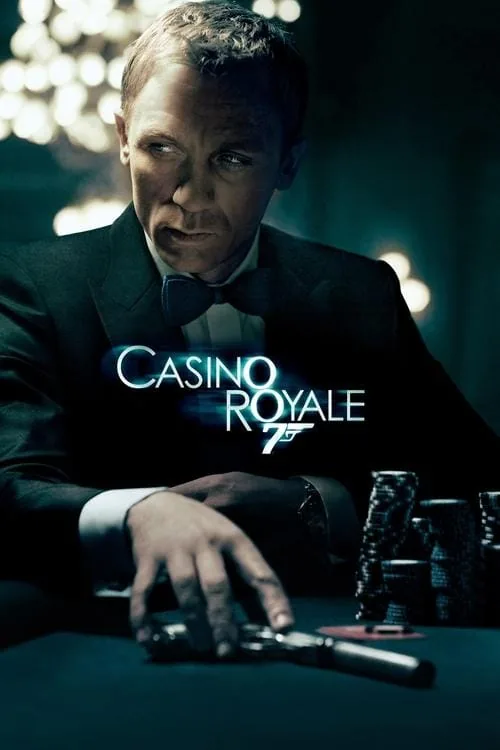
- Casino Royale (2006). Bond’s producers swapped baccarat for Texas hold’em precisely because Rounders had taught audiences the rules. The tournament at the heart of the film is absurd, magnificent and structurally perfect: three acts, three big hands, one poisoning.
- The Cincinnati Kid (1965). Steve McQueen versus Edward G. Robinson in the granddaddy of the genre. The final hand is statistically ridiculous, and the film knows it. “Gets down to what it’s all about, doesn’t it? Making the wrong move at the right time.” That’s the whole genre in one line.
- Molly’s Game (2017). Aaron Sorkin’s take flips the perspective: the story belongs to the woman running the game, not the players at it. Jessica Chastain narrates poker with the pace of a legal thriller, and the film never once needs you to know the rules.
Four films. Four different decades. One shared secret: none of them is really about poker.
Beyond poker: the games Hollywood forgot it loved
But poker isn’t the whole deck. Some of the best card cinema comes from games your grandmother played, and a few of these films outrank the poker canon entirely:
| Film | Year | Game | Why it matters |
|---|---|---|---|
| The Sting | 1973 | Crooked gin/poker on a train | Best cheating scene ever filmed; won Best Picture |
| Maverick | 1994 | Five-card draw | The genre’s only great comedy; Gibson, Foster, Garner |
| The Queen of Spades | 1949 | Faro | Gothic horror built on one obsessive hand |
| Rain Man | 1988 | Blackjack | Card counting as character study, not caper |
| 21 | 2008 | Blackjack | The MIT team story, glossy and loose with facts |
The Sting deserves a paragraph of its own. Paul Newman’s Henry Gondorff, pretending to be drunk while out-cheating a cheater on a moving train, is five minutes of pure craft. No music. No cuts to the cards. Just faces. If you only watch one scene from this entire article, make it that one, and then work through the rest of our crime movies collection, because the whole genre orbits that film.
What Hollywood gets wrong (and why it doesn’t matter)
Here’s the catch. Almost every hand you’ve ever seen in a movie is a statistical impossibility.
Straight flush versus full house. Four aces versus a royal flush. Real games are decided by unglamorous pairs and folded hands, but cinema needs the deck to cooperate with the drama. Last year I rewatched Casino Royale with a friend who plays seriously, and he paused the final hand to calculate the odds of that exact four-way showdown. His estimate was roughly one in tens of millions. Then he shrugged and pressed play, because the scene still works.
And that’s the point. Card movies aren’t documentaries. The game is a stage, the cards are costumes, and accuracy matters less than tension. The Cincinnati Kid’s screenwriter reportedly knew the final hand was preposterous and kept it anyway.
Does the fakery ever go too far, though? Sometimes. When a film treats the deck as pure magic, the stakes evaporate, because anything can happen and nothing means anything. The great ones cheat just enough. The bad ones deal themselves royal flushes every scene.
From the screen to your table
Every one of these films ends the same way for me: I want to shuffle a deck. You know that itch. The credits roll and suddenly a quiet evening of cards sounds better than another episode of anything.
The good news is you don’t need a high-stakes table or a tuxedo to scratch it. The same fifty-two cards behind all this cinema drama power hundreds of gentler classics, and plenty of them now live in your browser. A perfect example is Kings in the Corner, the classic family game where only a King can start a corner pile: you can play it free online against computer opponents, no download or sign-up, and a round takes about as long as a movie trailer. It’s the ideal palate cleanser between heavier films, a bit like the film equivalent of switching from espresso to chamomile.
So the next movie night, try the double feature approach: one card movie, then one actual card game with whoever’s on the couch. The Sting followed by a few rounds of anything beats a second film and a scrolling session. That’s not nostalgia talking. That’s just a better evening.
How to pick your next card game movie
Nine films is a lot of runway. If you’re not sure where to start, match the movie to your mood:
- Want tension? Rounders, then Casino Royale. The double bill that built modern poker cinema.
- Want style? The Sting. Ragtime, con men and the best-dressed cheating in film history.
- Want laughs? Maverick. The only entry you can watch with the whole family without a single wince.
- Want prestige? Molly’s Game or The Queen of Spades, and browse our drama section for what to queue up after.
- Still stuck? Our guide on how to choose what movie to watch solves the forty-five-minutes-of-scrolling problem for good.
One deck. Nine films. Ninety years of directors discovering the same secret: the most cinematic special effect ever invented is a person deciding whether to trust another person, with everything on the table.
Deal yourself in.
Frequently Asked Questions
What is the most realistic poker movie?
Rounders (1998) is widely considered the most realistic. Professional players praise its table talk, its reads and its depiction of grinding out a living at cards, and many pros of the 2000s boom cite it as the film that got them started.
What card game do they play in The Sting?
The famous train scene in The Sting (1973) is a crooked game of poker set up through a gin rummy hustle. Both Paul Newman’s and Robert Shaw’s characters are cheating; the scene’s tension comes from watching who cheats better.